Where the cables are and what they do
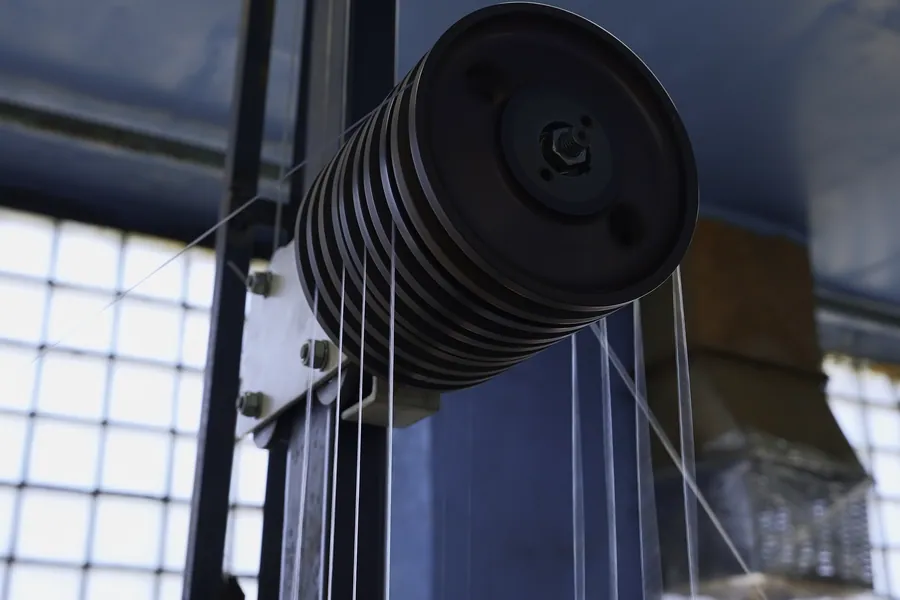
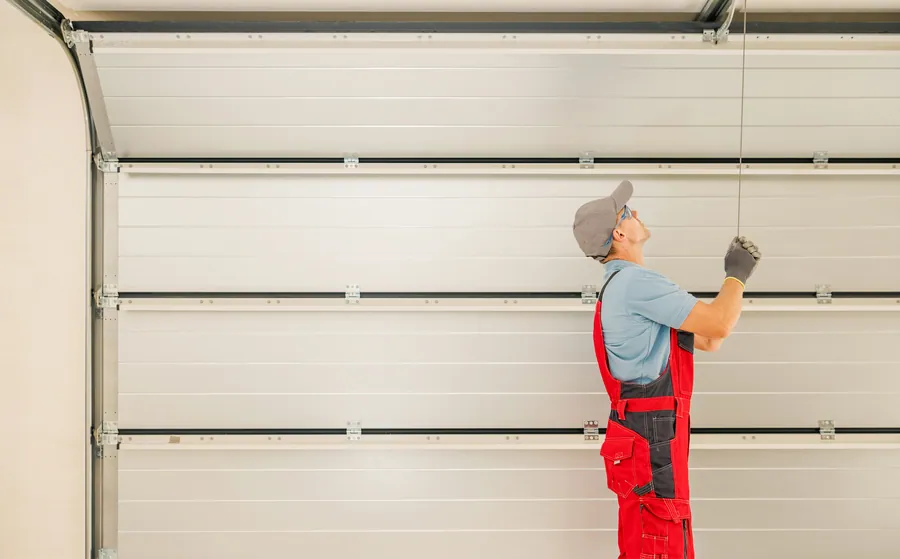
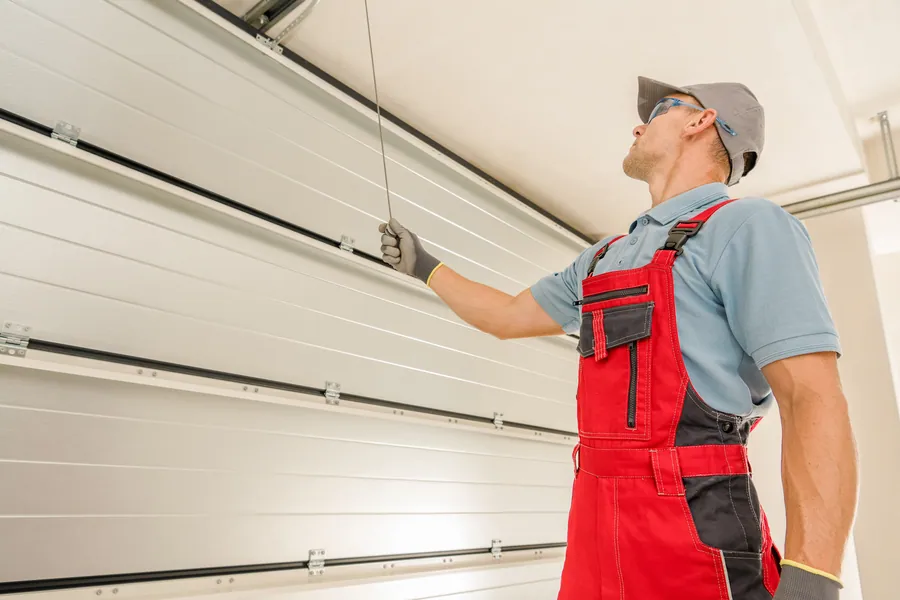
Stand inside your garage with the door closed and look at the bottom corners. On each side, a steel cable is looped onto a bracket at the lowest section. Follow it upward and it disappears behind the track, then wraps around a grooved aluminum drum at the end of the spring shaft.
That’s the whole system. The springs turn the shaft, the drums wind up the cables, and the cables pull the door up by its bottom corners. Both sides have to wind at exactly the same rate. If one cable is slack by even half an inch, that corner of the door lags behind, and the door racks in the opening.
On doors with extension springs the layout is a little different. The cable runs from the bottom bracket up over a pulley, back to a second pulley on the end of the spring, and then to an anchor point on the track hanger. Same idea, more places to wear.
How cable problems show up
Cable trouble rarely looks subtle. Here’s what people describe when they call.
- One side of the door is higher than the other, with a wedge-shaped gap at the floor
- The door stops partway and won’t go up or down
- A loop of cable is hanging down beside the track
- Cable is bunched up or crossed over itself on the drum
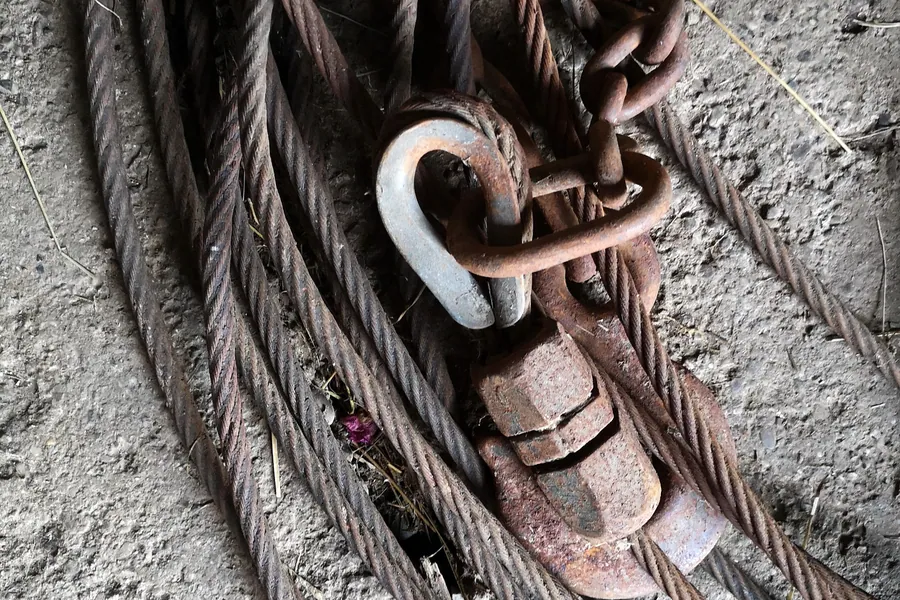
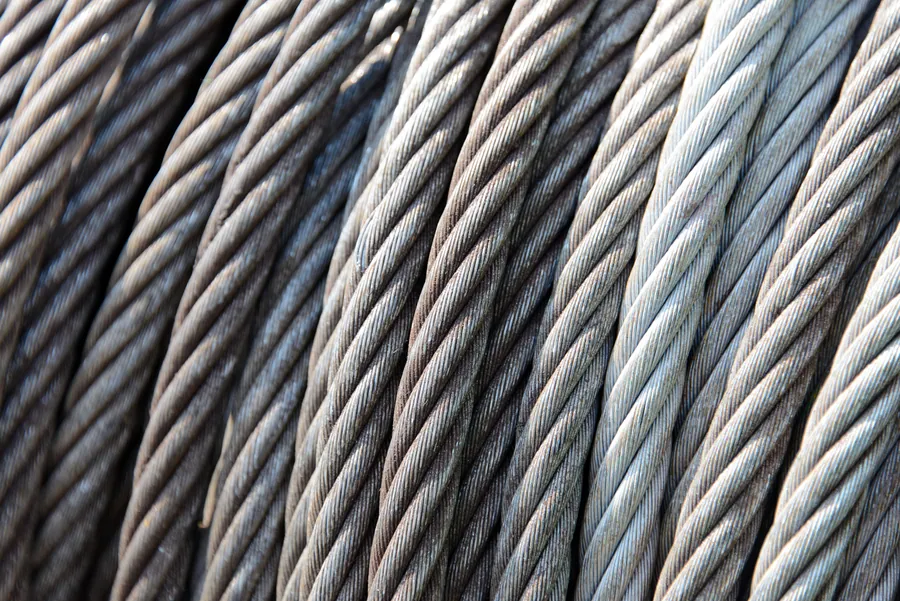
- You can see broken wire strands sticking out like whiskers near the bottom of the door
- The door came down with a crash and one cable is lying on the floor
If any of these sound familiar, stop using the opener. Running the motor against a jammed, crooked door is how sections get creased and tracks get bent.
Why cables fail
Rust at the bottom
This is the big one in our part of Wisconsin. The last foot of cable sits a few inches above the floor, right where slush, salt, and meltwater collect all winter. Galvanized cable resists corrosion for years, but the coating eventually gives up and the strands start breaking one at a time from the inside out. By the time you can see fraying, the cable has lost a good share of its strength.
A broken spring
When a torsion spring breaks with the door moving, the shaft stops pulling and the cables go slack. They often jump out of the drum grooves. In that case the cable itself may be fine, but it still needs to come off, be inspected, and be re-hung correctly once the new springs are in.
Something in the door’s way
A door that comes down on a trash can, a bumper, or a snow shovel stops on one side while the other keeps moving. The cable on the blocked side unspools and tangles. This is also why a working safety reverse on the opener matters.
Worn drums and pulleys
Drums are cast aluminum. After enough years the grooves wear, or the casting cracks near the set screws, and the cable no longer tracks cleanly. On extension systems, a pulley with a failed bearing will chew through a cable quickly.
Wrong cable for the door
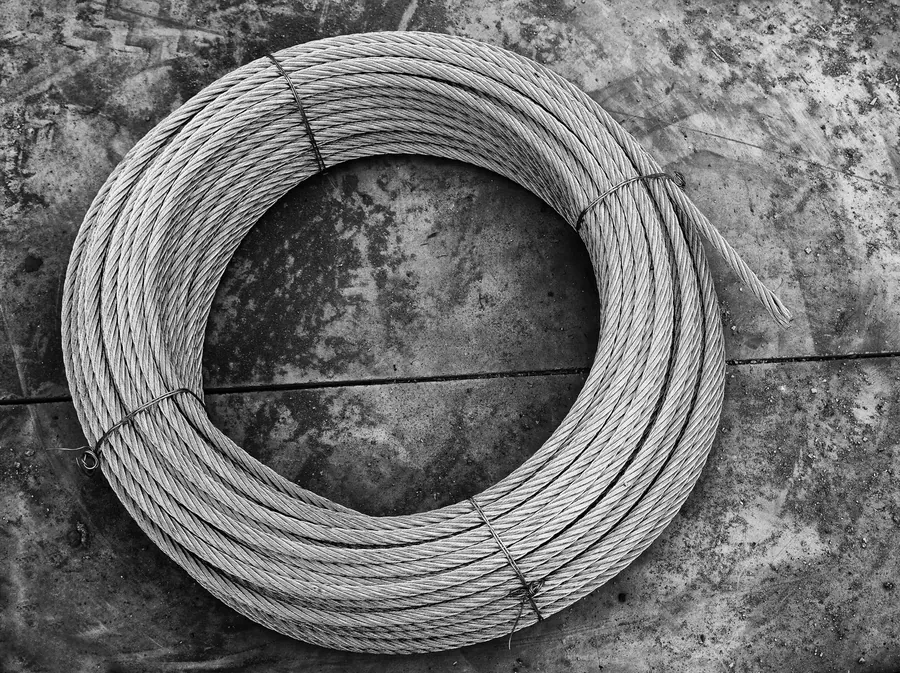
Cables come in different diameters and lengths for different door heights and weights. A cable that’s slightly too long leaves slack at the top of travel. Too thin, and it wears out early. We see both on doors that were worked on in a hurry.
What a proper cable repair includes
Swapping the cable is the easy part. Doing it safely and making sure it doesn’t happen again takes a few more steps.
- Lock the door in place. We clamp the tracks and, if the door is stuck partway, support it so nothing can drop.
- Take the tension off. The springs have to be unwound before the cables can be removed. There’s no safe shortcut around this.
- Find the cause. We look at the drums, bearings, bottom brackets, pulleys, and the track before fitting anything new. Otherwise the new cable inherits the old problem.
- Fit new cables on both sides. Matched length, correct diameter for the door, seated in the bottom bracket and the drum.
- Level and tension. With the door flat on the floor, both cables are snugged evenly, then the springs are wound and the door is balance-tested.
- Run it. Several full cycles by hand and with the opener, watching how the cable lays into the drum grooves each time.
We replace cables in pairs for the same reason we do springs. They’ve lived the same life, and a new cable beside a stretched old one makes it harder to keep the door level.