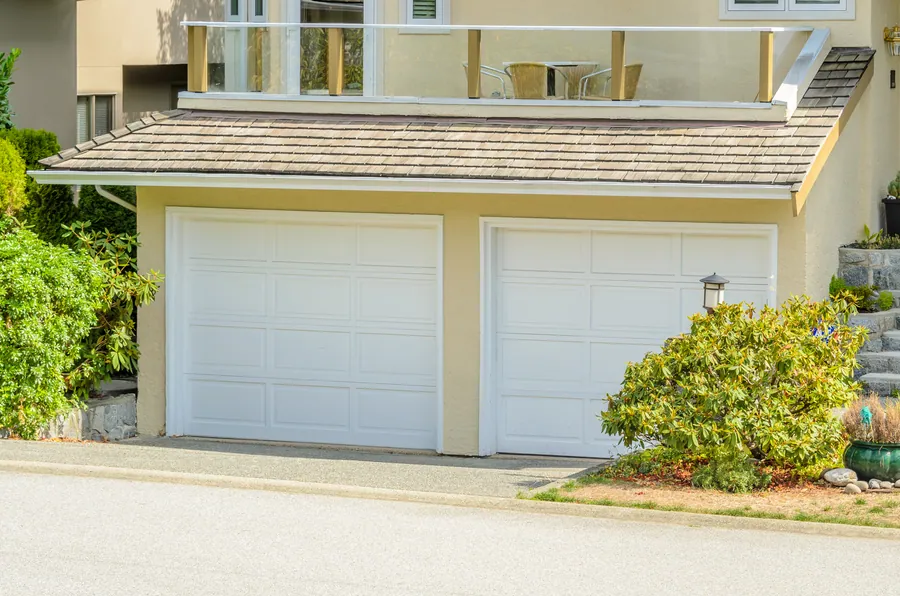
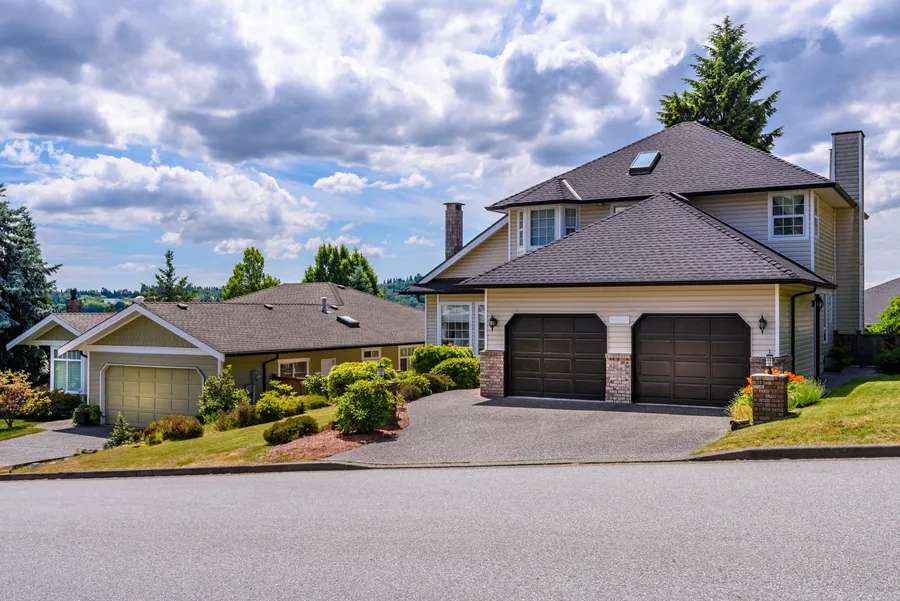
Garage door repair and installation in Franklin, WI
Broken springs, stubborn openers, doors that have seen one winter too many. We fix what can be fixed, replace what can't, and explain the difference before any work starts.
A garage door company that explains first and repairs second
Garage Doors Franklin WI looks after the doors that Franklin families and businesses use every day. That covers the full range: a spring that snapped overnight, an opener that has stopped listening to the remote, a dented section, a full replacement, and the yearly tune-up that keeps all of it from happening on a Monday morning.
Our approach is simple. We look at the whole door before we quote anything, because the part that failed is often not the part that caused the failure. We tell you what we found in plain language. If there's a modest repair that will hold and a bigger one that will last longer, you hear both, with prices. Then you decide.
Franklin is a good place to do this work. Much of the city was built between the 1970s and the early 2000s. Thousands of attached two- and three-car garages from those years are now reaching the age where springs, rollers, and openers come due. South of Ryan Road, the lots get bigger, and so do the buildings: detached shops, pole sheds, RV bays. We work on all of them.
Residential garage door services
Most calls start with one of these
For a family in Franklin, the garage door is usually the front door. It opens for the school run, the commute, hockey practice, and the grocery trip, which adds up to a couple of thousand cycles a year. These are the services homeowners ask us for most. Each has its own page with the details.
A new door is a one-day job that you live with for twenty-five years, so the choices made beforehand matter more than the installation itself. We start by measuring the opening, the headroom above it, and the depth behind it. Then we talk through what the door needs to do. Is the garage attached? Is there a bedroom above it? Does it face the wind coming across an open field?
From there it's a matter of construction, insulation, style, and glass. For attached garages, we usually point people toward a three-layer insulated steel door: steel, foam, steel. It's stiffer, quieter, and noticeably warmer than a single-skin door, and it doesn't rattle. Windows across the top section bring in daylight. Color and panel style are down to taste and to what suits the house.
Every new door goes in with its own track, springs sized to its actual weight, new rollers and hinges, and fresh seals on all four sides.
Garage doors are simple machines with a short list of things that go wrong. The skill is in working out which one you have, because several of them look alike from the driver's seat. An opener that hums without lifting the door is rarely an opener problem. Nine times out of ten, a spring has broken, and the motor is trying to lift two hundred pounds on its own.
So we begin every repair the same way: disconnect the opener, lift the door by hand, and feel what it's doing. That takes a minute and tells us most of what we need to know.
We repair far more doors than we replace, and we'd like to keep it that way. A steel door with sound sections can run for decades on fresh springs and rollers. But doors do wear out. Rust eats through the bottom section where the salt collects. The stiles crack where the hinges mount. The manufacturer retires the panel design, and after that a single dent means a door nobody can match.
When the repair bill approaches half the price of a comparable new door, we'll tell you, and we'll price both. A replacement is also the chance to fix what always bothered you about the old one: the cold, the noise, the look. Going from an uninsulated door to an insulated one is the largest comfort change you can make to a garage without touching the walls.
The old door and its track are hauled away as part of the job. If just one section is damaged and the rest of the door is healthy, replacing that section may be all you need.
Openers: repaired when they're worth it, replaced when they're not
The opener is the part of the system you interact with, so it gets blamed for everything. Sometimes that's fair. Gears strip, boards fail after a power surge, and safety sensors get knocked out of line by a hockey bag. Those are all repairable on a unit with good years left.
Other times the opener is the victim. A door that's out of balance makes the motor do the springs' work, and no opener survives that for long. We check the door before we touch the opener, every time.
Opener repair
Sensors, gears, logic boards, remotes, keypads, travel limits, and force settings, on chain, belt, and screw drives.
Franklin's business parks, service bays, contractor yards, and storage buildings run on overhead doors. They're larger and heavier than residential doors, and they cycle far more often. A spring that lasts seven years on a house can wear out in one on a busy bay.
We repair sectional overhead doors, rolling steel doors, and the commercial operators that drive them. That includes high-cycle springs, impact-damaged sections and slats, track and guides, safety edges and photo-eyes. We schedule around your working hours where we can, and a door that leaves a building unsecured goes to the front of the line.
Not every opening is 16 by 7, and not every house suits a white raised-panel door. Older detached garages around Franklin and Greendale were often framed to odd widths. Newer homes sometimes call for something with more character.
Custom can be as modest as a stock model ordered to the inch in a special color. It can be a carriage house design with composite overlays and arched glass, or a real cedar door built for one house. We'll be candid about upkeep. Real wood is beautiful and needs refinishing every few years in this climate. Wood-look steel gets most of the effect for almost none of the work.
Whether it's a ten-minute sensor adjustment or a new door, the job follows the same order.
ListenYou describe what's happening. A good description often narrows it to two or three suspects before we arrive.
InspectWe test the balance by hand, then follow the load path: springs, shaft, drums, cables, rollers, track, and opener.
ExplainYou get the cause, the options, and the cost of each. Nothing starts until you've agreed to it.
Do the workSprings sized to the door. Hardware matched to the load. Track set plumb and level. Seals adjusted to touch without dragging.
Test and hand overBalance test, safety reverse test, a few full cycles, and a quick walkthrough so you know what was done.
Why choose professional garage door service
What you're paying for when you call a professional
Plenty of garage door care is within reach of a handy homeowner, and we're happy to tell you which parts. Some of it isn't, and here's why.
The springs hold serious energy
A wound torsion spring stores enough force to lift a 200-pound door seven feet. Releasing that in a controlled way takes the right bars, the right sequence, and practice. It's the main reason this trade exists.
Sizing matters more than swapping
We choose the spring from the door's weight, height, and drum size. Copying the old spring only works if the old spring was right, and often it wasn't.
The cause isn't always where the symptom is
A torn top section can come from weak springs. A burned-out opener can come from seized rollers. Treating the symptom buys a few months.
Parts are on the truck
Springs in the common wire sizes, cables, rollers, hinges, bearings, sensors, and gear kits. Most repairs are finished in a single visit.
The safety systems get tested
Photo-eyes and the contact reverse are checked on every visit, whatever we were called for. An opener that won't reverse is a hazard that nobody notices until it matters.
You get a straight answer
If the door isn't worth fixing, we'll say so. If it only needs lubricating, we'll say that too.
Garage door maintenance
Thirty minutes a year that saves the big repair
The garage door is the heaviest moving object in most homes, and it tends to get less attention than the furnace filter. A yearly tune-up changes the odds considerably. Most failures we're called to were visible months earlier: a cable with a few broken strands, a spring losing tension, a roller starting to seize.
Balance test with the opener disconnected
Springs, cables, drums, and bearings inspected
Rollers and hinges checked, hardware tightened
Moving parts lubricated with a cold-rated product
Weather seals checked for gaps and stiffness
Opener limits, force, and safety reverse tested
Early fall is the best time. It gives you a chance to replace a tired spring on your schedule, before the first cold snap picks the day for you.
Southeastern Wisconsin puts a garage door through roughly a hundred degrees of temperature swing each year, with road salt, lake-effect damp, and the odd ice storm added in. Doors here don't fail at random. They fail in patterns, and most of the patterns are seasonal.
Springs break in cold snaps
Steel loses resilience as it gets colder. A spring that has been fatiguing for years often lets go on the first sub-zero night.
Seals freeze to the floor
Meltwater from the car runs to the threshold and refreezes. When the opener pulls, the seal tears or a section bends. Free it before pressing the button twice.
Lubricant turns stiff
Summer grease thickens in January. Rollers drag, the opener works harder and may reverse because it reads the resistance as an obstruction.
Salt works on the bottom
Bottom brackets, the lowest rollers, the last foot of cable, and the bottom section sit in salty slush for months. That's where corrosion starts.
Insulation earns its keep
An insulated door with good perimeter seals keeps an attached garage well above the outdoor temperature. Plumbing in shared walls and the rooms above benefit.
Low sun blinds sensors
Around the shortest days, afternoon sun can shine straight into a photo-eye. The door refuses to close for an hour, then behaves. A small shield cures it.
A few habits help. Keep the threshold clear of slush. Rinse the lower part of the door a couple of times each winter. Replace a bottom seal that has gone hard. And if the door won't budge on a freezing morning, don't keep hitting the button.
We won't promise that an insulated door will cut your heating bill by a set amount. Too much depends on the house. What we can say is that the garage will be warmer and quieter, and that drafts at the edges will stop.
Before-and-after gallery
What a difference the work makes
Drag the handle on each image to compare. These are illustrative comparisons built from licensed stock photographs. They show the kind of change each service makes and are not photos of our customers' homes.
BeforeAfter
Illustrative comparison using licensed stock photography. It shows the kind of change this service makes and is not a documented customer project.
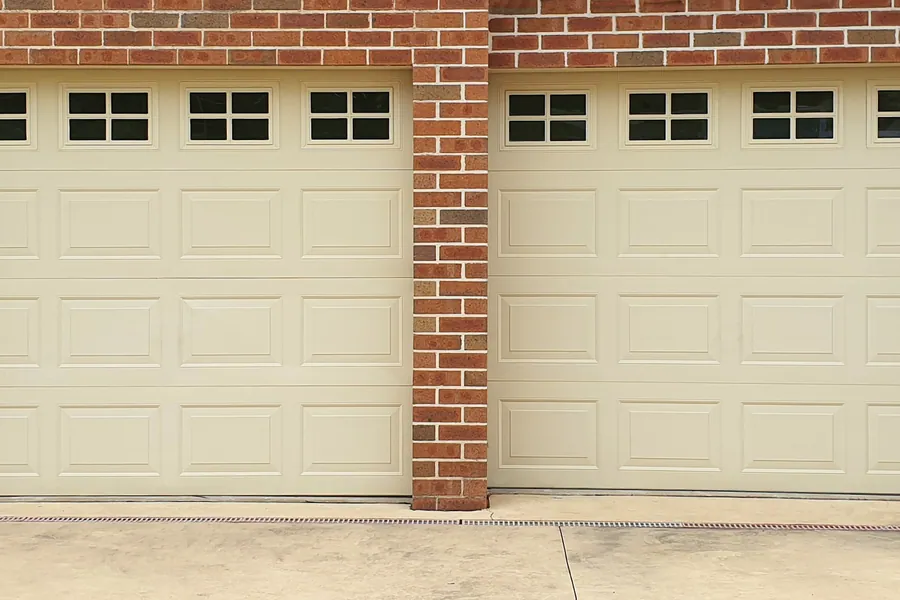
Old steel door to insulated raised-panel doors
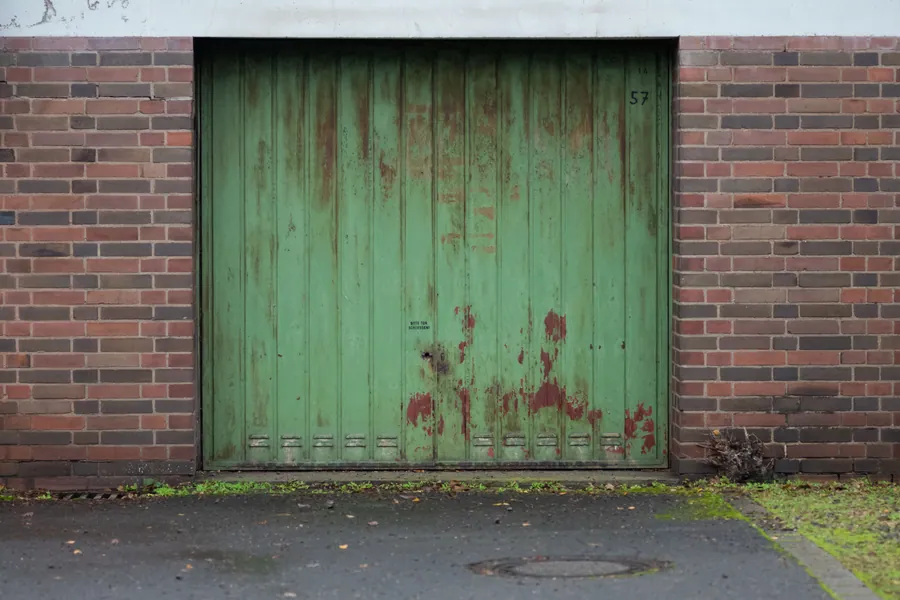
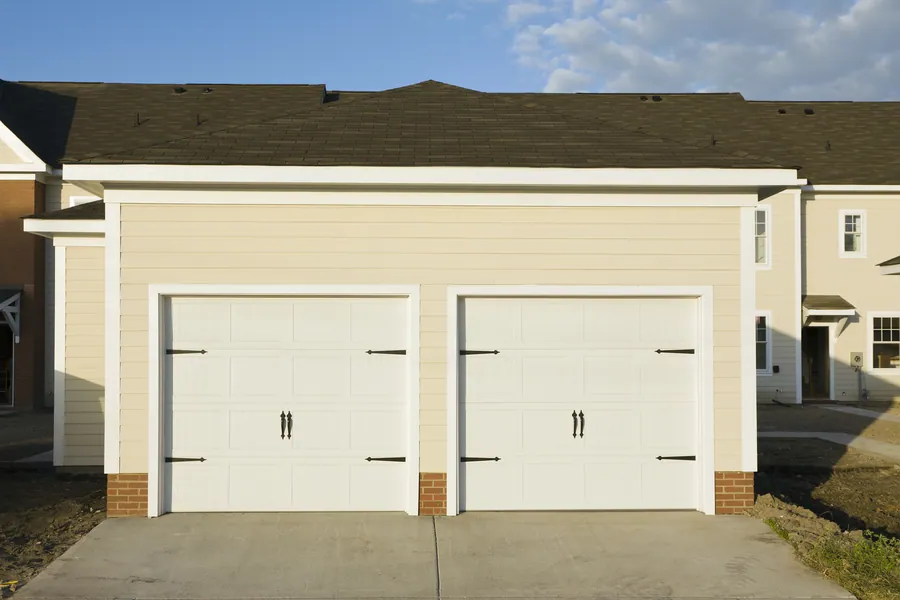
A rusting, uninsulated door comes out of a brick opening and a pair of raised-panel doors with windows goes in. New track, springs, and perimeter seals are part of the swap. The garage gains daylight and holds its temperature.
Illustrative comparison using licensed stock photography. It shows the kind of change this service makes and is not a documented customer project.
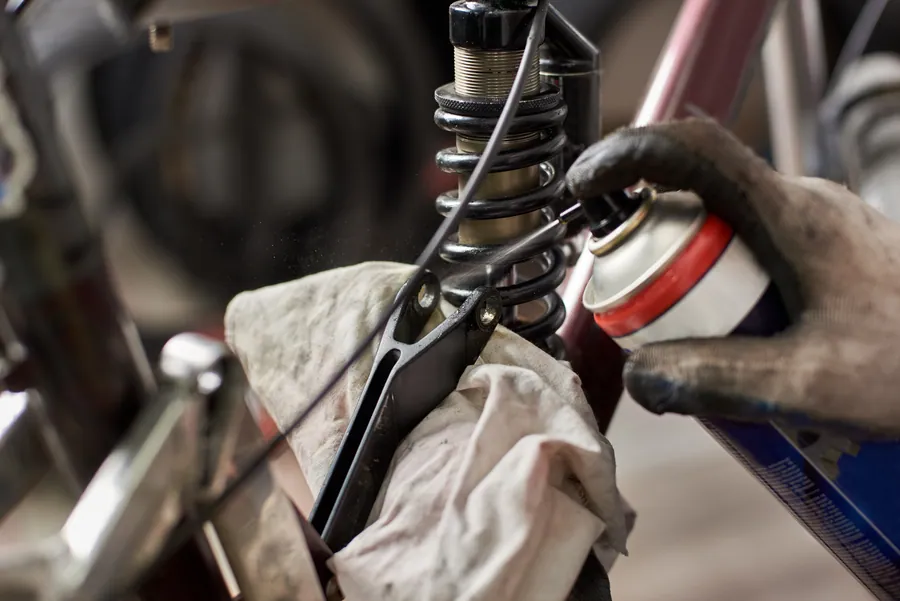
A fatigued spring and its replacement
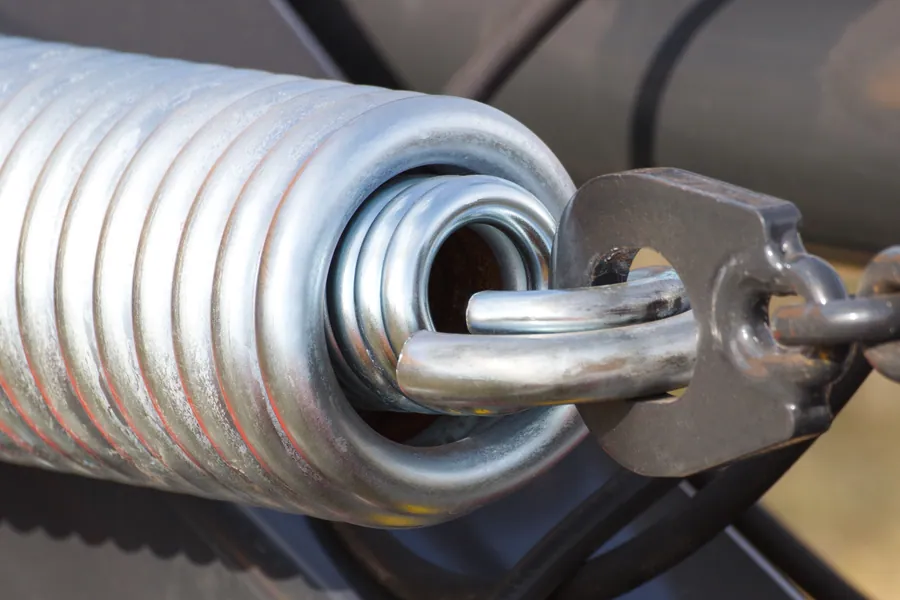
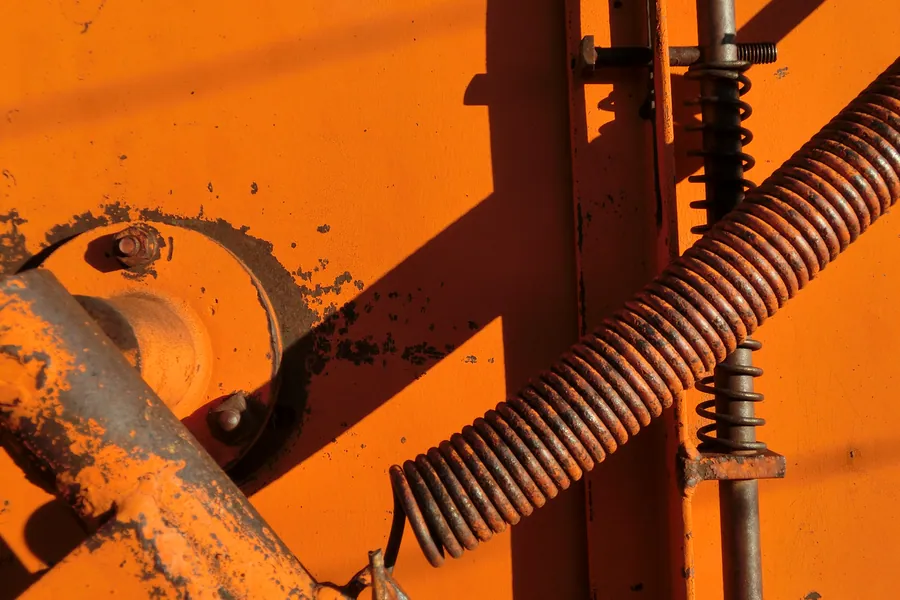
Rust pits the wire and gives cracks a place to start. New springs are sized to the door's weight and replaced as a pair, and the door is balance-tested at three heights before the opener is reconnected.
Illustrative comparison using licensed stock photography. It shows the kind of change this service makes and is not a documented customer project.
Dated opener to a quiet modern unit
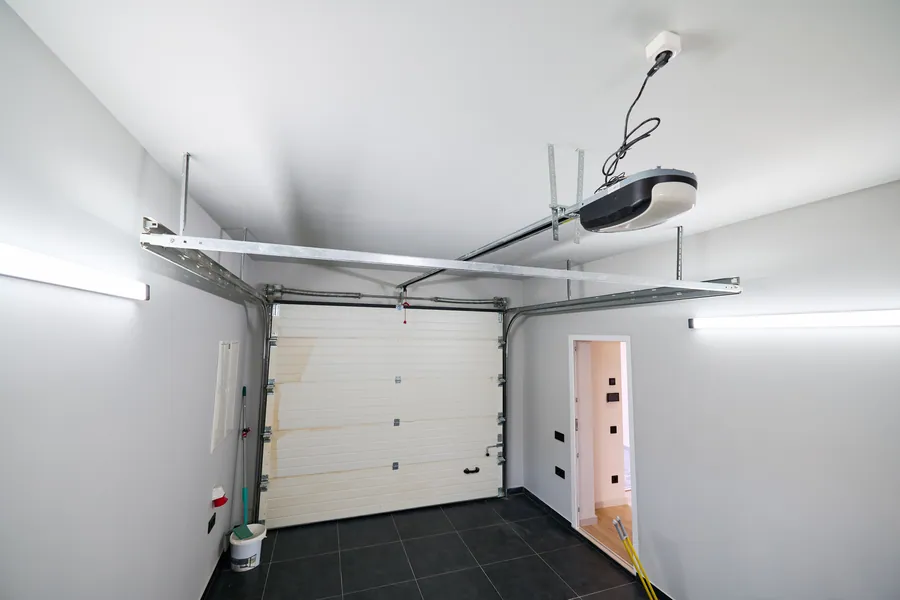
An older ceiling unit gives way to a current opener with a clean rail, proper bracing, and tidy sensor wiring. The first thing most people notice is how much quieter it is.
Illustrative comparison using licensed stock photography. It shows the kind of change this service makes and is not a documented customer project.
Peeling, stained panels to a clean door face
Flaking paint lets moisture reach bare steel. Treating the rust, straightening or reinforcing sections, and refinishing brings the face back and protects what's underneath.
These aren't case studies of named customers. They're typical scopes of work in Franklin, shown with reference photography, so you can see where your own project might fit.
Example scope · Replacement
Two single doors, one matched pair
Two aging single doors replaced together with insulated carriage-style doors, so the front of the house reads as one design. New track and springs on both, existing openers kept after testing.
Example scope · Repair
Spring, cable, and roller overhaul
A fifteen-year-old double door with a broken spring. Both springs replaced, cables renewed because of rust at the brackets, and steel rollers swapped for nylon. The door ends up quieter than when it was new.
Example scope · Opener
Belt drive under a bedroom
A loud chain drive beneath a second-floor bedroom replaced with a belt-drive unit on isolation mounts, with battery backup and a keypad at the door frame.
Service areas
Franklin and the communities around it
We work in and around Franklin and spend most days within a short drive of it. That means the neighborhoods off Drexel and Rawson, the subdivisions toward Ryan Road, and the larger properties to the south. It also means the neighboring communities, where the housing and the garage doors look much the same.
If yours isn't here, ask. A two-minute phone call usually settles it.
My garage door won’t open. What should I check first?
Look at the spring above the door. If you can see a gap in the coil, it’s broken, and you should leave the door alone. If the spring looks whole, check that the opener has power and that the wall control hasn’t been locked.
How much does garage door repair cost?
It depends on what has failed, the size of the door, and the parts involved. We give you a price after we’ve seen the door and before any work begins, so you can decide with real numbers in front of you.
Should I repair or replace my garage door?
Repair is usually the better choice when the sections are sound and the trouble is in the hardware. Replacement makes sense when there’s rust-through, cracked stiles, a discontinued design, or a repair bill approaching half the cost of a new door.
Do I need an insulated garage door in Wisconsin?
For an attached garage, we’d recommend one. It keeps the garage warmer than the outdoors, protects the rooms beside and above it, and makes the door quieter and stiffer.
How long do garage door springs last?
Standard springs are rated for about 10,000 open-and-close cycles. For a household that uses the garage as its main entrance, that’s roughly five to seven years.
Can I replace a garage door spring myself?
We’d advise against it. The springs are under enough tension to cause serious injury, and the job needs proper winding bars and a set sequence.
How often should a garage door be serviced?
Once a year is right for most homes. Early fall is the best time in our climate.
Do you work on commercial doors?
Yes. We repair sectional overhead doors, rolling steel doors, and commercial operators for shops, warehouses, and service bays.
Which areas do you serve?
Franklin and nearby communities including Oak Creek, Greendale, Hales Corners, Greenfield, Muskego, and South Milwaukee. If you’re a little farther out, ask.
Estimates for Franklin and nearby
Tell us what the door is doing.
Send the form or call, whichever is easier. Tell us what the door is doing and we'll explain what we'd check first, what the likely fixes are, and what happens next.