The doors we work on
Franklin’s commercial buildings are a mix: the business parks off Ryan Road and 27th Street, auto shops and contractors’ yards along Highway 100, storage facilities, and the small warehouses tucked behind retail strips. The doors on them fall into a few families.
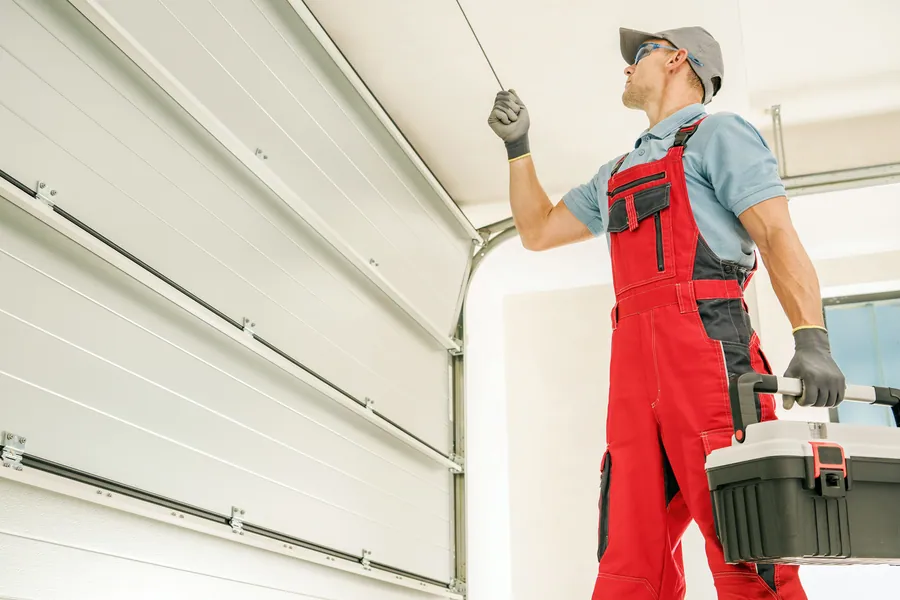
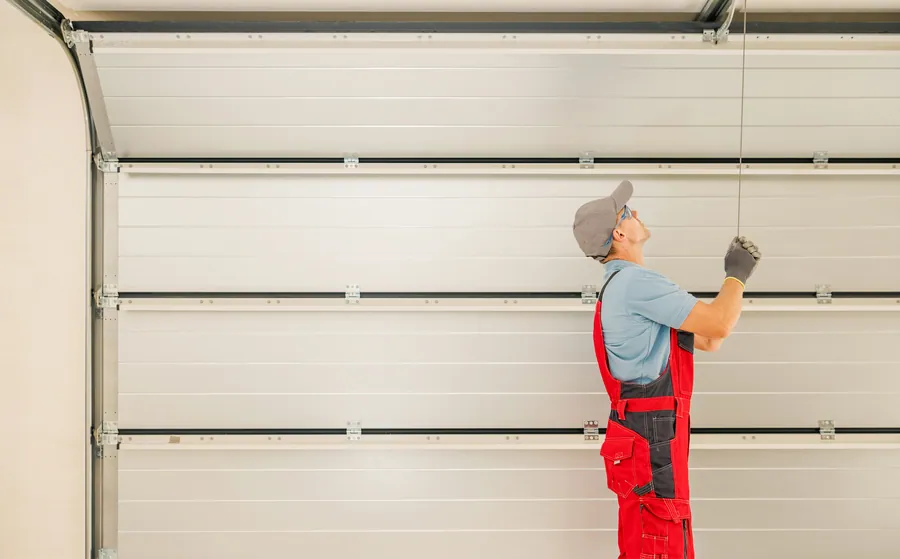
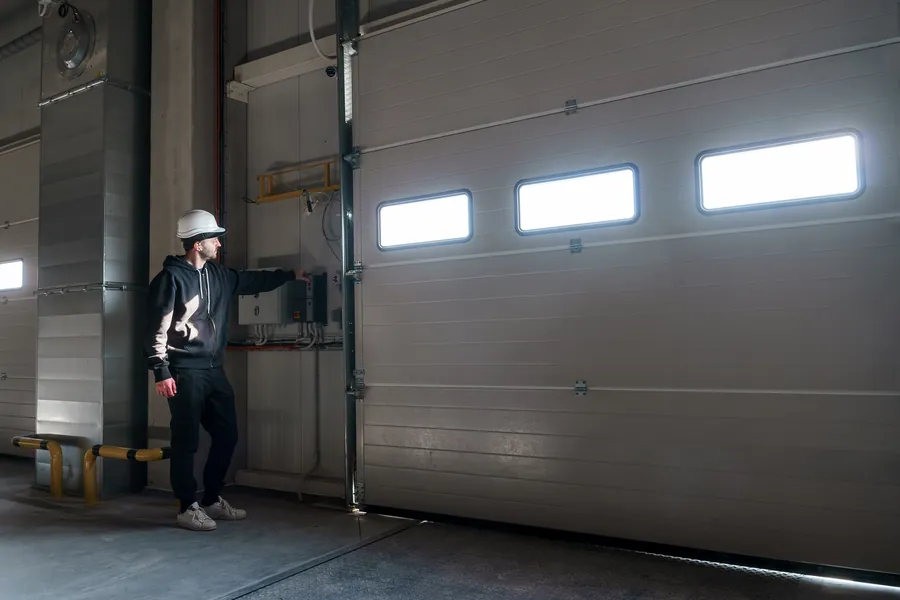
- Sectional overhead doors Insulated steel sections on heavy track, like an oversized residential door. Common on service bays, loading areas, and contractor shops.
- Rolling steel doors Interlocking slats that coil into a barrel above the opening. Tough, compact, and usual on warehouses and storage units.
- Full-view aluminum doors Glass panels in aluminum frames, used on showrooms, service drives, and fire stations.
- Dock doors Sectional doors on vertical-lift or high-lift track, sized to trailer height.
- Counter shutters and grilles Smaller rolling doors over service counters, concession windows, and storefronts.
- Self-storage roll-ups Light-gauge curtain doors with their own spring and latch quirks.
If yours doesn’t fit neatly into one of those, describe it or send a photo. Odds are we’ve worked on something like it.
How commercial doors differ from the one on your house
The principles are the same. Springs counterbalance the weight, and track or guides steer the travel. The scale is what changes.
A 12-by-14-foot insulated sectional door can weigh 500 pounds or more. The springs that balance it are larger in every dimension, the shaft is solid instead of hollow, and the track is 3-inch instead of 2-inch. Cables are thicker. Bearings are bigger. And the door may cycle 30 or 50 times a day instead of four.
That last point drives most commercial repair work. A spring rated for 10,000 cycles lasts years on a house. On a busy service bay, it can be used up in under a year. When we replace commercial springs, we ask how many times a day the door runs and recommend a cycle rating to suit. High-cycle springs cost more, but on a door that never rests they pay back quickly in avoided downtime.
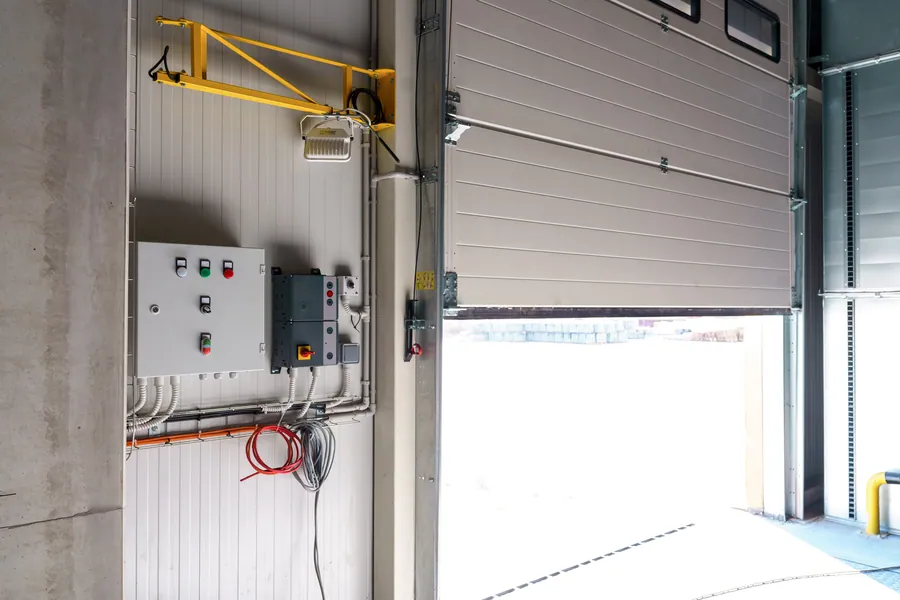
Common commercial repairs
Springs and counterbalance
Broken torsion springs on sectional doors. Lost tension in the barrel spring of a rolling door. Worn shaft bearings, cracked drums, and frayed cables. The symptoms are the same as on any door, only heavier: the operator strains or trips out, or the door won’t stay where it’s left.
Impact damage
Forklifts, delivery trucks, and trailers hit doors. A bent bottom section or a rolling door slat pushed out of its guide is among the most frequent calls we get from warehouses. Sections can usually be replaced individually. Rolling door slats can often be swapped without replacing the whole curtain, provided the guides aren’t crushed.
Track and guides
Commercial track gets hit too, and the heavier door does more harm when it runs through a bend. We straighten or replace track and re-anchor to the steel or masonry jamb. On rolling doors, the vertical guides and the bellmouth at the top are checked for spread and wear.
Operators
Commercial operators are built differently from residential openers. Jackshaft units mount beside the door and turn the shaft. Trolley units pull the door along a rail. Hoist units add a hand chain so the door can be opened in a power failure. We repair limit switches, brakes, clutches, contactors, control stations, and wiring, and replace units when parts are obsolete.
Safety devices
Photo-eyes, sensing edges along the bottom of the door, and the monitoring circuits that tie them to the operator. Current safety standards expect a commercial operator with momentary-contact close to have a monitored entrapment device. If your door closes at the push of a button and has no working eye or edge, that’s worth correcting.
Weather seals and thermal performance
Bottom astragals, jamb seals, header seals, and brush seals on rolling doors. In a heated shop, a door with shot seals is an open window all winter.